


Vasque Coldspark UltraDry Winter Boots
We designed the Coldspark UltraDry for winter hikers and backcountry explorers who refuse to let snow and ice end the season. A waterproof UltraDry membrane keeps your feet dry through slush, stream crossings, and deep powder, while 400g Thinsulate insulation holds warmth when the mercury drops below zero.
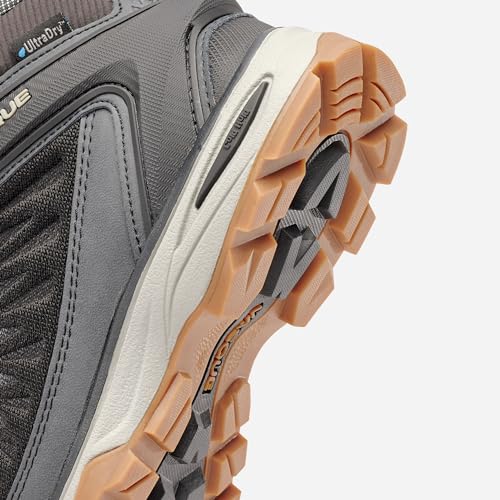
The platform sits on an aggressive multi-directional lug sole that bites into packed snow and ice, giving you confident footing on frozen trails and slippery slopes. An internal molded EVA midsole adds cushioning for long days on uneven terrain, and a gusseted tongue keeps snow out when you're breaking trail. Whether you're clearing winter trails or simply need bombproof boots for the coldest months, the Coldspark UltraDry delivers reliable protection and all-day comfort.
- UltraDry waterproof membrane — bonded construction for breathable, guaranteed dry protection
- 400g Thinsulate insulation rated for subzero temperatures
- Multi-directional lug outsole with winter-compound rubber for traction on ice and snow
- Molded EVA midsole for shock absorption and underfoot support
- Gusseted tongue design to seal out snow and debris
Waterproof Protection That Actually Works
Our UltraDry membrane isn’t a spray-on treatment that wears off after a season — it’s a bonded waterproof layer integrated into the boot’s construction. This means the Vasque Coldspark UltraDry winter boots stay dry through stream crossings, slushy parking lots, and hours in wet snow without the constant reapplication you’d need with wax or spray coatings.
The membrane also breathes, so moisture from your feet escapes while external water stays out. You won’t end up with clammy socks after a long winter hike. Combined with sealed seams and a tall gusseted tongue, the entire boot acts as a sealed system that handles the wettest conditions winter throws at you.
Insulation and Temperature Range
We spec’d 400 grams of Thinsulate insulation for the Coldspark because it’s the sweet spot for active winter use. That’s enough warmth to handle subzero morning starts and all-day cold exposure, but not so much bulk that your feet overheat during steep climbs or high-output activity.
Thinsulate compresses less than traditional insulation, so the boot maintains its cushioning and fit even after months of use. If you’re comparing insulation weights, 400g works well for temps down to around -25°F when paired with quality merino or synthetic socks. For less active standing or observation in extreme cold, consider layering with insulated insoles.
Traction System for Ice and Packed Snow
Outsole Design
The multi-directional lug pattern on the Coldspark sole bites in multiple planes — forward/back for climbing and braking, plus lateral edges for sidehill traverses and off-camber sections. Each lug is deep enough to self-clean as you walk, shedding mud and snow rather than packing up into a slick platform.
Winter Rubber Compound
We use a softer rubber formulation that stays flexible in freezing temps. Standard hiking boot rubber hardens below 20°F and loses grip; our winter compound maintains traction down to well below zero. On icy surfaces where no boot can guarantee perfect grip, the Coldspark gives you the best shot at stable footing without adding removable traction devices.
Insulated Winter Boots for Every Condition


What people are saying


Common Questions About the Coldspark UltraDry
The Coldspark's 400g Thinsulate insulation is designed to keep your feet warm in temperatures down to approximately -25°F when paired with quality winter socks. This rating assumes moderate activity levels like hiking or snowshoeing.
For stationary use in extreme cold — ice fishing, wildlife observation, or standing guard duty — you may want to add insulated insoles or consider a higher insulation weight. The UltraDry membrane and sealed construction help retain warmth by keeping moisture out, which is often more important than insulation alone in cold conditions.
Yes, the Coldspark works well with strap-on snowshoes and microspikes. The mid-height collar and reinforced toe cap provide sturdy attachment points for most recreational snowshoe bindings.
For technical mountaineering crampons that require a rigid sole and specific welts, the Coldspark is not the right choice — it's built as a flexible hiking boot rather than a mountaineering boot. If you need true crampon compatibility, look at our expedition-weight models with stiffer construction.
If you plan to wear heavyweight winter socks (merino or synthetic blends over 25% cushion), we recommend going up a half size from your standard Vasque fit. Your toes should have about a thumb's width of space in front when standing, which allows room for thicker socks without compression.
If you typically wear lightweight or medium-weight socks, stick with your normal Vasque size. The boot's interior volume is designed to accommodate a standard hiking sock without extra room, so sizing up with thinner socks will cause your heel to slip during descents.
The Coldspark works great for daily winter use — shoveling snow, walking the dog, commuting in cold weather. The waterproof UltraDry membrane and insulation handle whatever winter throws at you around town.
That said, the aggressive lug sole is designed for trail traction and can feel a bit heavy for all-day casual wear on pavement. If you're looking for a boot primarily for urban winter use with occasional trail walks, our Snowburban line offers a lighter, more versatile option. The Coldspark excels when you need serious trail performance in harsh winter conditions.
With proper care, the UltraDry membrane should maintain full waterproof protection for several years of regular use. Unlike spray-on treatments that wear off seasonally, the bonded membrane construction is integrated into the boot's layering and doesn't degrade from normal wear.
The key to longevity is keeping the leather uppers conditioned and avoiding prolonged exposure to extreme heat, which can separate the membrane layers. Clean your boots after each outing, let them air-dry at room temperature, and apply leather conditioner every 4-6 weeks of active use. If you notice water starting to seep through after extensive wear, check that the seams and stitching are still intact — that's usually the first point of failure rather than the membrane itself.
The Coldspark sits in the middle of our winter lineup in terms of warmth and weight. The Snowblime UltraDry is lighter and better for fast-paced winter hiking, while expedition boots like the Lost 40 offer heavier insulation for stationary cold exposure. Our most significant technical differentiator across the line is the outsole material — all UltraDry models share the same waterproof membrane, but rubber compounds and lug patterns vary based on intended terrain and activity level.
The full-grain leather upper needs 15-20 miles of moderate walking to fully break in. Start with shorter walks around your neighborhood or easy trails before committing to a full-day winter hike.
During break-in, pay attention to any pressure points or hot spots. Adjust your lacing tension to relieve specific areas — looser through the forefoot if your toes feel cramped, tighter through the ankle if your heel is lifting. The leather will conform to your foot shape over time, so minor discomfort in the first few wears usually resolves as the material softens. If pain persists after 20 miles, you may need a different size or width.